
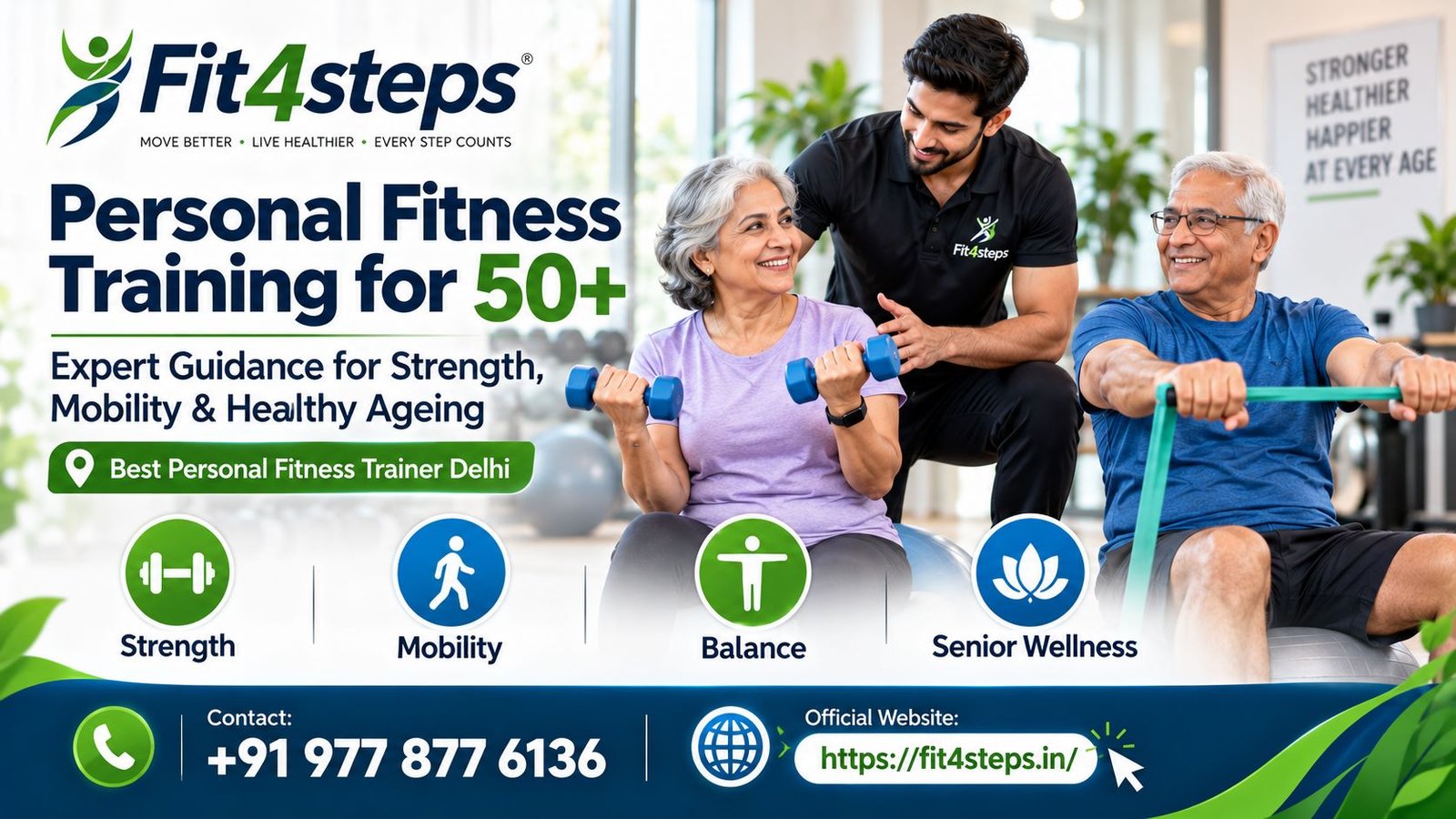
Fitness industry is increasingly recognising the importance of personalised exercise programs for adults who want to remain active, improve physical fitness, and maintain a healthy lifestyle beyond middle age.
For individuals exploring Personal fitness training for 50+, the focus is shifting from demanding workout routines towards sustainable exercise strategies that support strength, cardiovascular fitness, mobility, and overall physical well-being.
Meanwhile, searches for the Best personal fitness trainer Delhi reflect growing interest in qualified professionals who can provide individual attention, appropriate exercise modifications, and practical fitness guidance.
For working professionals, homemakers, and active older adults, personalised fitness training offers an opportunity to establish an exercise routine that matches their abilities, preferences, and lifestyle.
The important consideration is selecting a program that encourages consistent participation while respecting individual physical requirements.
Why Fitness Priorities Change After 50
Physical fitness needs can change with age, activity levels, and lifestyle habits.
Some adults experience reductions in muscle strength, flexibility, or exercise tolerance, particularly when physical activity has been limited.
Sedentary work routines can also contribute to reduced movement and physical conditioning.
However, reaching a particular age does not automatically mean that someone must avoid challenging exercise.
The appropriate approach depends on individual fitness levels, medical considerations, and training experience.
A personalised program can help individuals identify meaningful objectives and work towards them through appropriate progression.
What Is Personal Fitness Training for 50+?
Personal fitness training for 50+ is an individualised exercise approach designed around the physical abilities, health considerations, and fitness objectives of adults in this age group.
It may combine resistance exercises, cardiovascular activity, mobility training, and suitable balance work.
A qualified trainer generally begins by understanding the participant’s exercise history, existing capabilities, and preferred activities.
The training plan can then be adjusted according to movement quality, exercise tolerance, and progress.
Unlike generic workout programs, personalised coaching allows exercises to be modified when necessary.
It should not replace medical treatment or professional rehabilitation services.
Why Midlife Fitness Is About More Than Weight Management
Body weight is only one aspect of physical health.
Muscle strength, cardiovascular endurance, joint mobility, and physical confidence also influence fitness.
An individual may maintain a stable body weight while experiencing reduced muscular conditioning because of limited physical activity.
Similarly, exercise benefits should not be judged exclusively by changes in appearance.
A well-designed fitness program can support several objectives, including improved physical capacity and better exercise habits.
This broader approach can help individuals focus on meaningful progress rather than short-term cosmetic results.
Strength Training for Maintaining Muscle Function
Resistance training is an important component of many appropriate midlife fitness programs.
Exercises may include supported squats, resistance-band movements, controlled pushing exercises, and suitable free-weight activities.
The objective is to challenge muscles at an appropriate level while maintaining proper technique.
Training intensity should reflect the participant’s abilities and experience.
Individuals with relevant medical conditions or exercise restrictions may require professional healthcare guidance before beginning a new program.
Cardiovascular Fitness and Active Living
Cardiovascular activity supports heart and lung fitness and contributes to general physical conditioning.
Depending on individual capabilities, suitable activities may include walking, stationary cycling, swimming, or controlled aerobic exercises.
Intensity should be selected according to fitness level and health considerations.
A person returning to exercise may need a different approach from someone who already participates in regular physical activity.
Personal trainers can help individuals gradually develop exercise tolerance without relying on excessively demanding sessions.
Consistency and appropriate progression are more valuable than attempting difficult workouts without preparation.
Why Choosing the Right Trainer in Delhi Matters
People searching for the Best personal fitness trainer Delhi should consider professional qualifications and training suitability rather than relying exclusively on online ratings.
A trainer working with adults over 50 should understand exercise modification, safe movement progression, and the importance of communication.
In a city such as Delhi, practical considerations may also influence fitness decisions.
Travel requirements, available exercise spaces, and outdoor air conditions can affect where training is conducted.
Indoor training may offer a useful alternative when outdoor conditions are unsuitable.
The best arrangement is one that supports safe and manageable participation.
Home Fitness Training vs Gym-Based Coaching
Individuals can choose different training environments according to their requirements.
| Training Factor | Home Personal Training | Gym-Based Personal Training |
| Environment | Familiar residential setting | Dedicated fitness facility |
| Equipment | Depends on available resources | May include specialised equipment |
| Travel | Reduced travel requirements | Requires visiting the facility |
| Privacy | Greater personal privacy | Shared exercise environment |
| Training Flexibility | Adapted to available space | Adapted to facility resources |
| Main Consideration | Safe exercise area | Accessibility and appropriate supervision |
Neither option is automatically better.
The trainer’s competence, program suitability, and participant preferences are more important than the location alone.
Recovery and Exercise Progression After 50
Recovery plays an important role in exercise programming.
Muscles and other tissues need appropriate opportunities to adapt to physical activity.
Insufficient recovery, unsuitable intensity, or poor exercise technique may contribute to unnecessary discomfort.
A qualified trainer should consider individual responses to exercise before increasing difficulty.
Training plans may include variations in exercise intensity and appropriate movement preparation.
Persistent pain, unusual breathlessness, dizziness, or other concerning symptoms should not be treated as normal workout effects.
Such symptoms require appropriate medical assessment.
Creating a Sustainable Personal Fitness Routine
A successful fitness program should fit realistically into an individual’s lifestyle.
Working professionals may require a different approach from retired adults or individuals managing family responsibilities.
Instead of prescribing identical exercises to everyone, trainers should identify activities that participants can perform comfortably and confidently.
An effective program may include:
- Initial Assessment: Understanding current fitness abilities and relevant limitations.
- Goal Setting: Identifying realistic and measurable objectives.
- Exercise Selection: Choosing suitable strength, mobility, and cardiovascular activities.
- Technique Guidance: Supporting appropriate movement execution.
- Progress Monitoring: Reviewing exercise tolerance and functional improvements.
- Program Adjustment: Modifying activities as abilities and requirements change.
Practical planning can help reduce unnecessary barriers to participation.
How to Evaluate a Personal Fitness Trainer
Choosing the right professional requires more than comparing session fees.
Prospective clients should ask about qualifications, experience with midlife adults, assessment procedures, and training methods.
It is also important to understand how the trainer manages exercise discomfort or identifies situations requiring healthcare referral.
A professional should explain the purpose of exercises and welcome feedback.
Clear communication helps establish realistic expectations and creates a more supportive training experience.
Frequently Asked Questions (FAQs)
1. What is Personal fitness training for 50+?
It is a personalised exercise approach designed around the abilities, goals, and physical requirements of adults aged 50 and above.
2. How can I find the Best personal fitness trainer Delhi?
Look for relevant qualifications, experience with adults over 50, personalised assessment methods, appropriate safety practices, and clear communication.
3. Can people over 50 start strength training?
Many adults over 50 can participate in suitable strength training programs, although medical conditions and individual limitations may require professional assessment.
4. Is personal training at home effective after 50?
Home training can be effective when exercises are appropriately designed, the environment is safe, and suitable professional guidance is available.
5. What should a fitness program after 50 include?
Depending on individual requirements, it may include resistance training, cardiovascular exercise, mobility work, balance activities, and appropriate recovery.
Media Contact
Department: Personal Fitness Training and Midlife Wellness Enquiries
Contact: +91 977 877 6136
Email: fit4stepswellness@gmail.com
Official Website: https://fit4steps.in/
Read More:-
https://shopnets.com/best-personal-trainers-near-me-building-confidence-through-senior-fitness/