
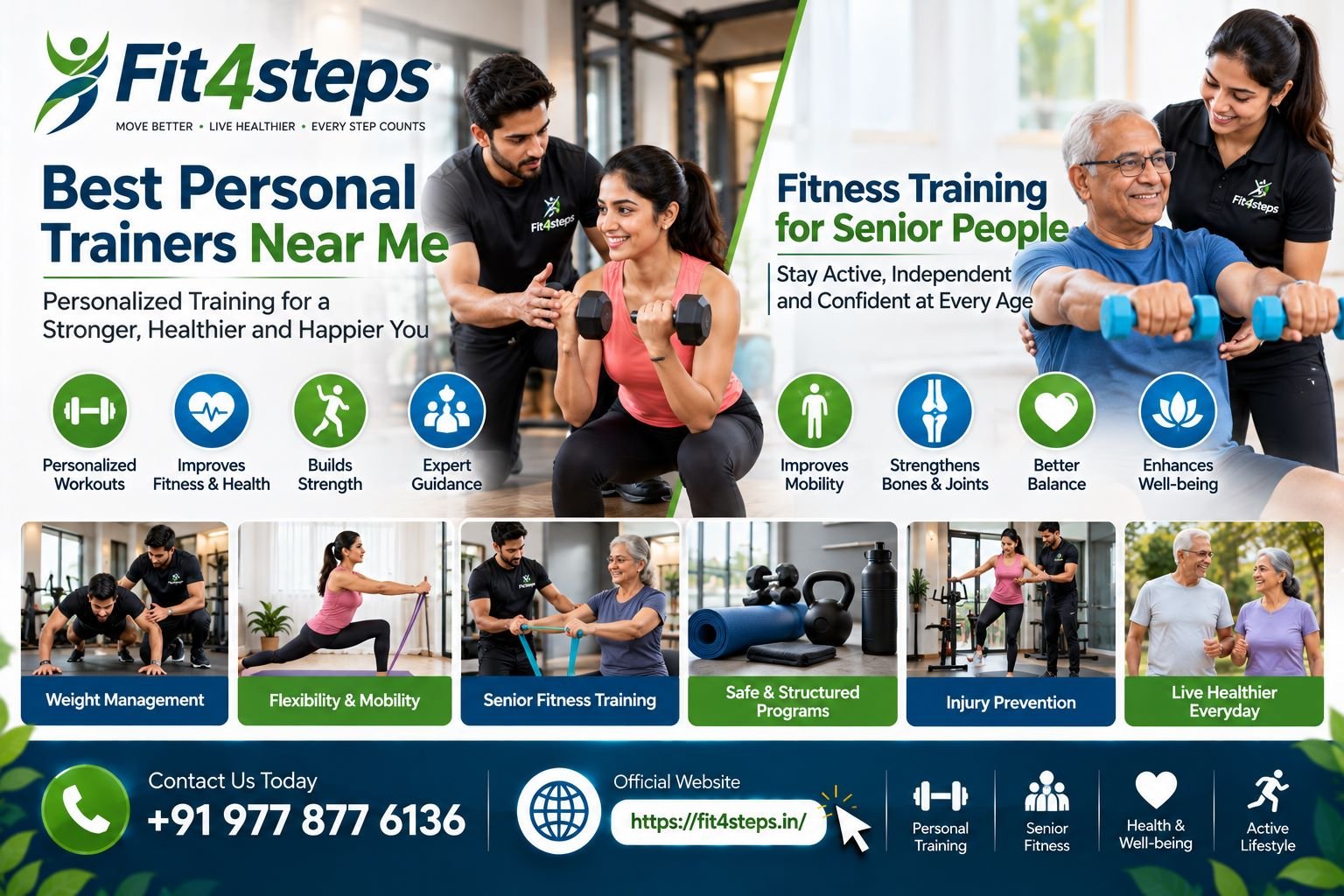
For older adults, maintaining an active lifestyle is not simply about completing workouts but developing healthy movement habits that fit their abilities and preferences.
People searching for the best personal trainers near me often want professional support that makes exercise easier to understand, more accessible, and suitable for their physical capabilities.
Meanwhile, Fitness training for senior people is increasingly focused on creating manageable exercise routines that encourage regular movement, strengthen physical confidence, and support overall well-being.
Unlike conventional programs designed around demanding performance targets, senior-focused fitness coaching can prioritise sustainable habits, individual motivation, and appropriate exercise progression.
For older adults and their families, understanding the role of personalised coaching can help them identify fitness services that support a healthier and more active lifestyle.
Why Consistency Matters More Than Workout Intensity
One of the biggest challenges in fitness is maintaining participation.
A demanding workout may feel productive, but an exercise routine that is unsuitable for someone’s physical abilities can become difficult to sustain.
Older adults may benefit from a balanced approach that combines appropriate exercise intensity with manageable goals.
A qualified trainer can help identify activities that are challenging enough to support improvement without creating unnecessary discomfort.
The objective is to develop a routine that participants can maintain comfortably and confidently.
Understanding Personalised Fitness Coaching for Seniors
Fitness training for senior people involves adapting exercise programs to individual physical abilities, preferences, and fitness objectives.
A suitable program may include resistance exercises, cardiovascular activities, flexibility work, and controlled balance training.
However, the combination should reflect the participant’s needs.
For example, an active older adult may prefer strength-focused training, while someone returning to exercise may benefit from simpler movements and gradual progression.
Personalised coaching allows trainers to adjust activities based on movement quality, exercise tolerance, and feedback.
The emphasis remains on suitable participation rather than following a standard workout plan.
What Makes a Personal Trainer Suitable for Older Adults?
Searching for the best personal trainers near me can produce numerous options, but not every trainer has relevant experience working with older adults.
A suitable professional should demonstrate clear communication, appropriate qualifications, and an understanding of exercise modification.
Trainers should also recognise that individual abilities differ significantly.
Important professional qualities include:
- Relevant Experience: Understanding the fitness needs of older adults.
- Personalised Planning: Adapting exercises to individual capabilities.
- Safety Awareness: Identifying unsuitable movements and potential risks.
- Communication Skills: Explaining instructions clearly and respectfully.
- Progress Monitoring: Evaluating improvements without unrealistic expectations.
- Professional Boundaries: Referring medical concerns to qualified healthcare professionals.
These qualities can be more meaningful than promotional claims about being the best trainer.
Why Motivation Influences Exercise Participation
Motivation plays an important role in maintaining physical activity.
Some older adults enjoy structured exercise sessions, while others prefer activities that resemble familiar recreational movements.
A personal trainer can help identify these preferences and incorporate suitable activities into the fitness program.
Encouragement should remain positive and realistic.
Excessive pressure or comparison with other participants may reduce confidence.
A supportive coaching relationship can help older adults develop greater confidence in their physical abilities.
Setting Meaningful Fitness Goals
Fitness goals should reflect the participant’s interests and capabilities.
Not every older adult wants to build significant muscle mass or complete demanding exercise challenges.
Some individuals may want to improve walking endurance, maintain general strength, or feel more comfortable participating in recreational activities.
Others may prefer a routine that provides structured movement and social engagement.
A qualified trainer can translate these preferences into appropriate exercises.
Goals should also be reviewed as the participant’s abilities and interests develop.
The most useful objectives are realistic, understandable, and connected to meaningful activities.
Personal Training vs General Fitness Programs
Personal coaching and general exercise classes provide different experiences.
| Fitness Factor | Personal Training | General Fitness Classes |
| Exercise Selection | Adapted to individual abilities | Designed for a group |
| Trainer Attention | Individual guidance | Shared supervision |
| Exercise Modifications | Personalised adjustments | Depends on class structure |
| Goal Setting | Individual fitness objectives | Common class objectives |
| Progress Assessment | Participant-specific evaluation | Varies by program |
| Main Consideration | Trainer suitability | Class accessibility and safety |
Both approaches may be appropriate depending on the participant’s needs.
The best choice is one that encourages safe, enjoyable, and consistent exercise.
How Trainers Can Make Exercise More Engaging
Repetition is often necessary for developing physical skills, but exercise routines do not need to feel monotonous.
A trainer may introduce suitable variations in movement patterns, resistance exercises, or cardiovascular activities.
For example, a participant may combine controlled resistance-band exercises with comfortable walking or supported coordination activities.
However, exercise variety should not introduce unnecessary instability or excessive intensity.
The trainer must evaluate whether each activity remains appropriate.
A thoughtfully structured program can help participants remain interested while supporting their fitness objectives.
The Importance of Communication and Feedback
Communication helps trainers understand how participants respond to exercise.
Older adults should feel comfortable discussing fatigue, discomfort, confidence, or concerns about particular movements.
This feedback can help identify when exercises should be modified.
A responsible trainer should avoid dismissing pain or encouraging participants to ignore concerning symptoms.
Persistent pain, dizziness, unusual breathlessness, or other unexpected symptoms may require medical evaluation.
Personal fitness trainers provide exercise guidance, not medical diagnosis or treatment.
Respecting this distinction supports more responsible coaching.
Creating a Supportive Fitness Environment
The exercise environment can influence participation.
Some older adults prefer home training because it offers privacy and familiar surroundings.
Others enjoy visiting a fitness centre where they can access suitable equipment and interact with other participants.
A safe environment should provide adequate movement space, stable surfaces, and equipment appropriate for the exercises.
Families may offer encouragement, but older adults should remain involved in decisions about their own fitness activities.
A supportive environment respects individual independence while providing practical assistance when necessary.
How to Evaluate Personal Training Services
Individuals considering personal coaching should assess the complete training experience rather than relying exclusively on cost or popularity.
A useful evaluation includes:
- Qualifications: Review relevant fitness training credentials.
- Senior Fitness Experience: Ask about experience working with older adults.
- Initial Assessment: Understand how exercise abilities are evaluated.
- Program Flexibility: Confirm that exercises can be modified.
- Communication: Assess whether instructions are clear and respectful.
- Progress Evaluation: Ask how fitness improvements are monitored.
A professional trainer should explain their approach without guaranteeing specific physical outcomes.
Frequently Asked Questions (FAQs)
1. How can I find the best personal trainers near me for senior fitness?
Evaluate relevant qualifications, experience with older adults, personalised training methods, safety awareness, and communication rather than relying only on rankings.
2. What is Fitness training for senior people?
It is an exercise approach adapted to older adults’ capabilities and goals, often involving strength, mobility, balance, and cardiovascular activities.
3. Can personal training help seniors maintain an active lifestyle?
Appropriate personal training can support regular exercise participation, physical conditioning, movement confidence, and sustainable fitness habits.
4. Is personal training better than group exercise for older adults?
Neither approach is universally better. Personal training offers individual attention, while suitable group exercise can provide structured activity and social interaction.
5. What should older adults expect from a qualified personal trainer?
They should expect an appropriate fitness assessment, personalised exercises, clear instructions, suitable progression, and attention to individual safety requirements.
Media Contact
Department: Senior Fitness and Personal Training Enquiries
Contact: +91 977 877 6136
Email: fit4stepswellness@gmail.com
Official Website: https://fit4steps.in/