
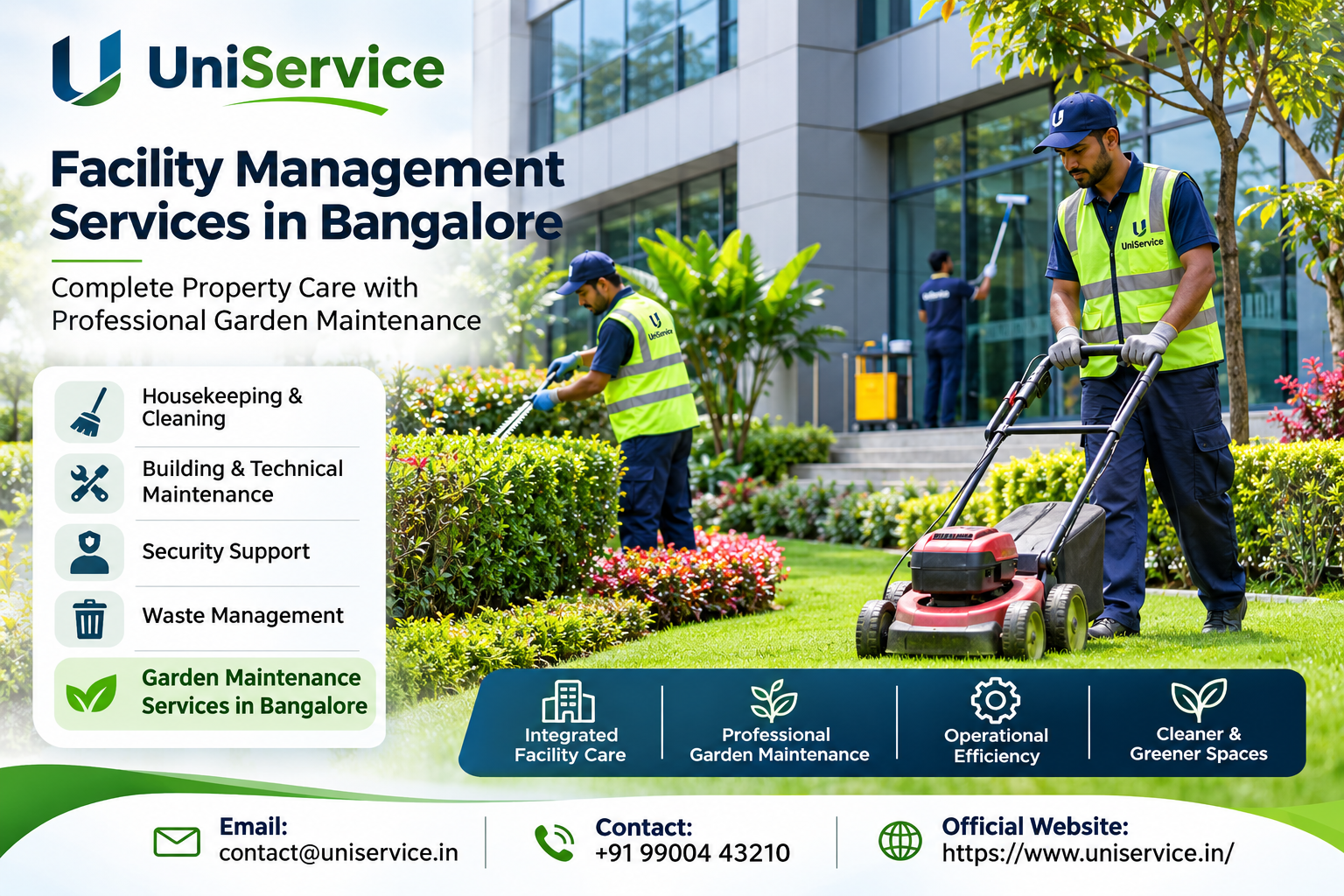
Urban properties are increasingly recognising the importance of maintaining outdoor environments alongside essential building infrastructure. From corporate campuses and residential communities to educational institutions and commercial complexes, landscaped spaces contribute to a property’s appearance, usability, and environmental quality.
Professional facility management services in bangalore help property owners coordinate building operations, common-area maintenance, housekeeping, and outdoor upkeep through organised management practices.
Meanwhile, Garden Maintenance Services in Bangalore focus on keeping lawns, plants, trees, and landscaped areas healthy through suitable horticultural practices.
When these responsibilities are coordinated, property managers can develop more practical approaches to maintaining attractive, functional, and environmentally responsible premises.
This approach highlights an important consideration for urban property management: outdoor spaces should be treated as essential property assets rather than decorative additions.
Why Green Spaces Matter in Urban Properties
Landscaped areas can influence how people experience commercial and residential environments.
Well-maintained gardens provide places for relaxation, support outdoor activities, and improve the visual character of buildings.
Trees and vegetation may also provide shade and contribute to local environmental quality.
However, neglected green spaces can create problems involving overgrown plants, damaged pathways, blocked drains, and unsuitable water accumulation.
Maintaining landscaped areas therefore requires regular attention and clearly assigned responsibilities.
What Are Facility Management Services in Bangalore?
Facility management services in bangalore involve coordinating the operational and maintenance requirements of commercial, residential, and institutional properties.
Depending on the service arrangement, responsibilities may include housekeeping, technical maintenance, sanitation, waste management, landscaping, and contractor supervision.
Integrated management brings these activities into a coordinated operational framework.
For example, garden irrigation may depend on properly functioning water pumps, while outdoor cleaning requires cooperation between landscaping and housekeeping teams.
A coordinated approach helps prevent overlapping responsibilities and supports more consistent property maintenance.
Understanding Garden Maintenance Services in Bangalore
Garden Maintenance Services in Bangalore typically include activities such as lawn care, pruning, plant maintenance, weed control, irrigation management, and general landscape upkeep.
The exact work depends on garden size, vegetation type, soil conditions, and property requirements.
A landscaped corporate campus may need a different maintenance plan from a compact apartment garden.
Similarly, decorative lawns require different care from gardens containing native plants, shrubs, or mature trees.
Professional garden maintenance should therefore begin with understanding the landscape rather than applying identical treatment across every property.
Why Bangalore’s Climate Influences Landscape Planning
Bangalore’s seasonal rainfall patterns and changing weather conditions affect garden maintenance decisions.
During wetter conditions, poor drainage and excessive moisture may damage certain plants or encourage unwanted growth.
Drier conditions can increase the need for carefully managed irrigation.
Different plant species also have different water, sunlight, and soil requirements.
Rather than watering every section equally, landscaping teams should assess the actual needs of the vegetation.
Suitable plant selection and soil management can help create landscapes that are easier to maintain and better matched to local conditions.
Water Conservation Through Smarter Garden Management
Water management is an important consideration for landscaped properties.
Excessive irrigation can waste water, increase maintenance expenses, and contribute to waterlogging.
Insufficient watering may damage lawns and ornamental plants.
Suitable irrigation methods, soil moisture monitoring, mulching, and appropriate plant selection can help improve water efficiency.
Where feasible and compliant with applicable requirements, properties may also evaluate suitable rainwater collection or reuse arrangements.
Effective landscaping balances plant health, operational costs, and environmental considerations.
How Landscaping and Facility Management Work Together
Garden maintenance becomes more effective when coordinated with broader property operations.
For example, landscaping teams may identify damaged outdoor lighting, leaking irrigation pipes, or blocked drainage channels.
These concerns may require support from electrical, plumbing, or civil maintenance personnel.
Similarly, housekeeping teams may need to coordinate the removal of fallen leaves and gardening debris.
Clear communication helps ensure that problems are assigned to the appropriate personnel.
This coordinated approach reduces uncertainty and supports more organised maintenance responsibilities.
Different Properties Need Different Landscape Solutions
| Property Type | Landscaping Priority | Management Consideration |
| Corporate Offices | Attractive entrances and green spaces | Professional appearance and visitor comfort |
| Residential Communities | Lawns, pathways and shared gardens | Resident usability and safety |
| Educational Campuses | Outdoor activity areas and greenery | Safe access and appropriate vegetation |
| Commercial Complexes | Entrances and decorative landscaping | Customer movement and maintenance access |
| Industrial Campuses | Boundary greenery and selected open areas | Practical upkeep and operational safety |
A suitable maintenance programme should reflect the property’s intended use.
Soil Health and Plant Selection
Healthy gardens depend on appropriate soil conditions.
Soil texture, drainage, nutrient availability, and plant compatibility influence vegetation performance.
Landscaping teams should assess these conditions before recommending extensive planting or replacing unhealthy vegetation.
Choosing suitable species can also help reduce unnecessary maintenance.
Native and locally adapted plants may offer advantages where they are appropriate for the property’s conditions.
However, plant selection should account for available space, root development, safety, and long-term maintenance requirements.
Good planning helps prevent avoidable planting failures.
Sustainable Handling of Garden Waste
Landscaping activities produce organic waste, including leaves, grass cuttings, and trimmed branches.
Improper disposal can create sanitation concerns and obstruct drains or pathways.
Properties can consider suitable segregation and approved organic waste management practices.
Where practical, selected garden waste may be suitable for composting under appropriate conditions.
Composting arrangements require suitable space, supervision, and management to avoid odour or pest problems.
Integrating garden waste handling with broader facility operations can support cleaner common areas and more responsible property maintenance.
Maintaining Safe and Accessible Outdoor Areas
Landscaped environments must remain safe for residents, employees, and visitors.
Overgrown branches may obstruct walkways, while damaged paving can create tripping hazards.
Garden maintenance should therefore include attention to visibility, pedestrian access, and the condition of surrounding surfaces.
Mature trees may require assessment by appropriately qualified specialists when structural concerns arise.
Outdoor maintenance activities should also be conducted with suitable tools and safety precautions.
Attractive landscaping should never come at the expense of safe access.
Choosing the Right Facility and Garden Maintenance Provider
Property owners should evaluate professional providers according to service capability, practical experience, and maintenance planning.
Important considerations include:
- Landscape Knowledge: Understanding of plants, soil, and irrigation.
- Integrated Services: Coordination between gardening and building maintenance.
- Trained Personnel: Suitable supervision and safe working procedures.
- Water Management: Appropriate irrigation planning and resource efficiency.
- Service Transparency: Clear responsibilities and maintenance reporting.
- Customised Planning: Solutions based on property size and requirements.
The appropriate provider should understand both the technical and environmental responsibilities involved in maintaining a property.
Frequently Asked Questions (FAQs)
1. What do facility management services in Bangalore include?
They may include housekeeping, building maintenance, technical coordination, sanitation, landscaping, waste management, and other property support activities.
2. What are Garden Maintenance Services in Bangalore?
These services involve maintaining lawns, plants, trees, irrigation systems, and landscaped areas according to their specific horticultural requirements.
3. Why is garden maintenance important for commercial properties?
It supports a professional appearance, comfortable outdoor spaces, safer access, and more organised property upkeep.
4. Can professional landscaping help conserve water?
Yes. Suitable irrigation methods, plant selection, soil care, and moisture management can help reduce unnecessary water use.
5. How can property managers choose a garden maintenance provider?
They should assess horticultural experience, staff training, maintenance planning, water management practices, service scope, and reporting procedures.
Media Contact
Department: Facility Management and Landscape Maintenance Enquiries
Enquiry Categories: Facility Management, Garden Maintenance, Commercial Landscaping, Property Maintenance, and Integrated Facility Services.
Contact: +91 99004 43210
Email: contact@uniservice.in
Official Website: https://www.uniservice.in/