
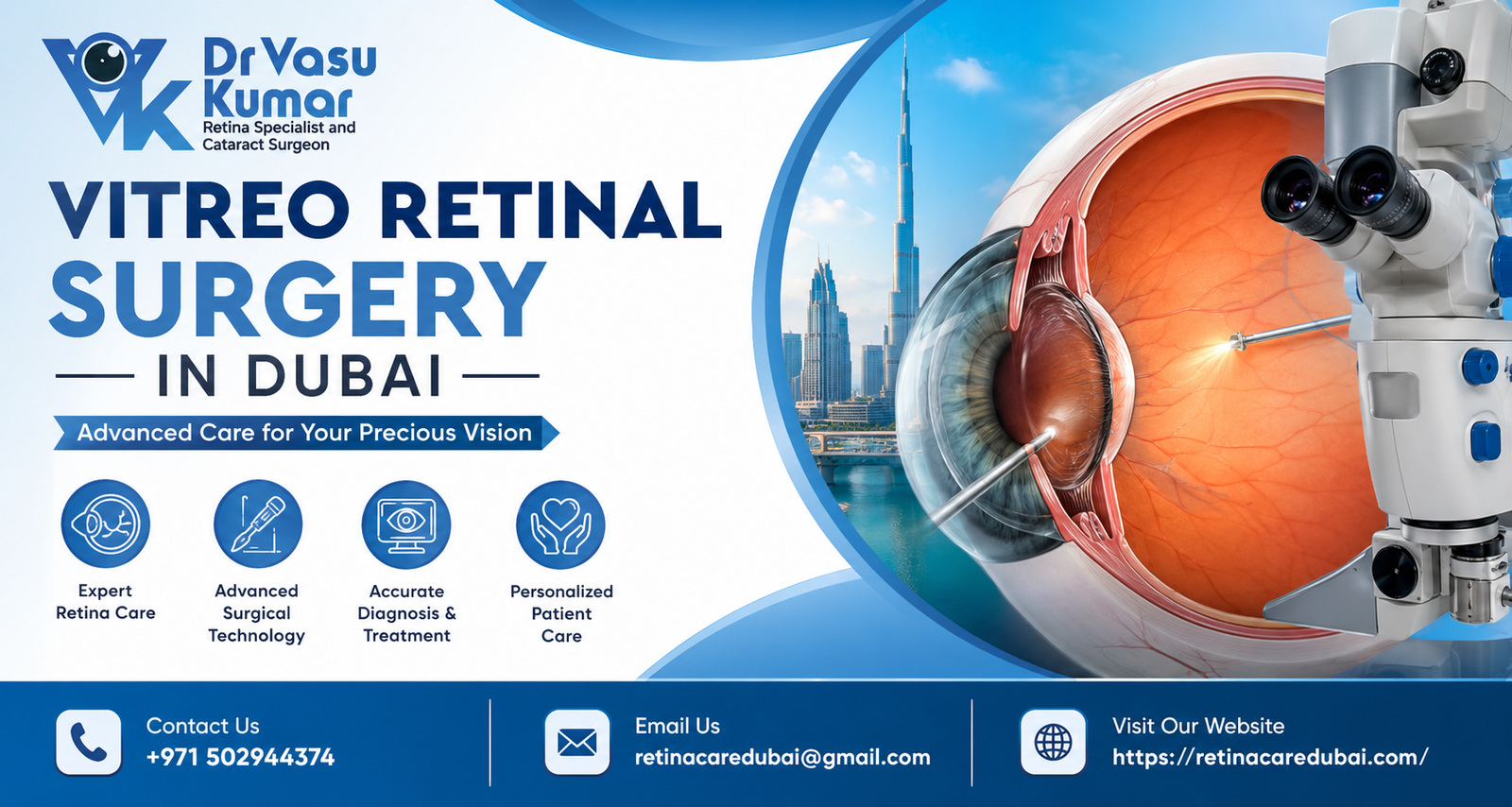
Sudden flashes of light, a rapid increase in floaters, or a dark shadow moving across the field of vision can indicate a serious retinal problem. One treatment option used by eye specialists is retinal detachment laser surgery, particularly when a retinal tear or small retinal break is identified before it develops into a more extensive detachment. Understanding how this treatment works, when it is recommended, and what recovery involves can help patients respond quickly when warning signs appear.
What Is Retinal Detachment?
The retina is a thin, light-sensitive layer located at the back of the eye. It converts light into electrical signals that are sent to the brain, allowing us to see. Retinal detachment occurs when the retina separates from the underlying tissue that supports it.
This condition requires prompt medical attention because prolonged separation can damage retinal cells and may result in permanent vision loss.
A retinal tear can sometimes occur before a complete detachment. When detected early, appropriate treatment may prevent fluid from passing through the tear and causing further separation.
What Is Retinal Detachment Laser Surgery?
Retinal laser treatment, also known as laser photocoagulation or laser retinopexy, uses carefully controlled laser energy to create tiny treatment spots around a retinal tear or weak area.
Over time, these laser spots form scar tissue that helps create a stronger attachment between the retina and the underlying tissue. The purpose is to seal the retinal break and reduce the possibility of fluid entering underneath the retina.
However, laser treatment is not suitable for every patient. A complete or extensive retinal detachment may require another procedure, such as vitrectomy, scleral buckle surgery, or pneumatic retinopexy.
When Can Laser Treatment Be Used?
An ophthalmologist may consider laser treatment when examination reveals:
- A retinal tear or hole
- A high-risk retinal break
- Certain localized retinal detachments
- Retinal breaks identified during another retinal procedure
- Peripheral retinal areas requiring preventive treatment
The final decision depends on the location and size of the tear, whether the retina has detached, the condition of the macula, and other individual eye factors.
Warning Signs That Should Not Be Ignored
Retinal conditions can sometimes develop without pain. Recognizing visual changes is therefore extremely important.
Common warning signs include:
- Sudden appearance of many new floaters
- Flashes or streaks of light
- A dark curtain or shadow across vision
- Sudden loss of peripheral vision
- Unexplained blurred or reduced eyesight
These symptoms do not always mean retinal detachment, but they require prompt examination because a retinal tear may progress if left untreated.
How Does Retinal Laser Treatment Work?
Before treatment, the specialist performs a detailed retinal examination, usually after dilating the pupil. The eye is numbed, and a specialized laser is directed toward the retinal tear or targeted area.
The procedure generally involves:
Step 1: Detailed Eye Examination
The specialist evaluates the retina and identifies the exact location of the tear, hole, or abnormal area.
Step 2: Eye Preparation
Dilating drops are commonly used to provide a wider view of the retina. Local anaesthetic or numbing drops may be applied.
Step 3: Laser Application
Precise laser spots are placed around the retinal break. The treatment creates controlled areas of scarring.
Step 4: Post-Treatment Monitoring
After treatment, the patient receives instructions regarding activities, medications, warning signs, and follow-up appointments.
Laser Treatment vs Other Retinal Procedures
| TreatmentCommon PurposeApproach | ||
| Laser retinopexy | Retinal tears or selected small problems | Laser creates a sealing barrier |
| Cryotherapy | Certain retinal breaks | Controlled freezing creates adhesion |
| Pneumatic retinopexy | Selected retinal detachments | Gas bubble helps reposition retina |
| Scleral buckle | Specific retinal detachments | External support is placed around the eye |
| Vitrectomy | Complex or extensive detachments | Vitreous is removed and retinal breaks are repaired |
No single treatment is best for every patient. A retinal specialist selects the approach according to the clinical findings.
What Are the Benefits of Laser Treatment?
When appropriately recommended, laser treatment can provide several advantages:
- Helps seal a retinal tear
- May reduce the risk of progression to retinal detachment
- Usually requires less invasive treatment than major retinal surgery
- Can target specific retinal areas precisely
- May be performed as an outpatient procedure
- Often involves a relatively straightforward recovery
The biggest advantage is early intervention. Treating a retinal break before significant detachment develops can be an important part of protecting vision.
What Happens After Treatment?
Recovery depends on the underlying retinal problem and the extent of treatment. Temporary blurred vision, light sensitivity, or mild discomfort may occur after the procedure.
Patients should follow the specialist’s instructions carefully and attend scheduled follow-up examinations.
Important Recovery Guidelines
- Avoid strenuous activity if advised by your specialist.
- Do not rub or press on the treated eye.
- Follow prescribed medication instructions.
- Attend all follow-up appointments.
- Monitor for new flashes or floaters.
- Seek urgent assessment if a curtain-like shadow develops.
Patients who undergo a larger retinal operation involving a gas bubble may receive additional restrictions, including specific positioning instructions and temporary limitations on air travel.
Can Laser Treatment Restore Lost Vision?
The primary purpose of laser treatment is to seal a retinal break and prevent further retinal damage. It does not necessarily restore vision that has already been permanently lost because of retinal damage.
Visual recovery depends on several factors, including whether the macula was affected, how long the retina was detached, the severity of the condition, and the success of treatment.
This is why early diagnosis is so important.
Who May Have a Higher Risk?
Certain factors can increase the risk of retinal tears or detachment, including:
- Severe short-sightedness
- Previous cataract or eye surgery
- Significant eye trauma
- Previous retinal detachment
- Family history of retinal detachment
- Certain retinal disorders
People with known risk factors may benefit from regular comprehensive eye examinations.
Questions to Ask Your Retinal Specialist
Before proceeding with treatment, patients can ask:
- Do I have a retinal tear or retinal detachment?
- Is laser treatment appropriate for my condition?
- Has the macula been affected?
- Will I need surgery in addition to laser treatment?
- What activities should I avoid after treatment?
- When should I return for follow-up?
- What symptoms require emergency attention?
Clear communication with the specialist helps patients understand their treatment plan and expected recovery.
Frequently Asked Questions
Is retinal detachment laser surgery painful?
The eye is generally numbed before laser treatment. Patients may experience bright lights, pressure, or some discomfort, but individual experiences differ.
Can laser treatment repair every retinal detachment?
No. Laser is particularly useful for suitable retinal tears and selected localized conditions. More extensive detachments may require surgical repair.
How quickly should retinal detachment be treated?
Suspected retinal detachment should be evaluated urgently. Delaying assessment can increase the risk of permanent vision loss.
Can retinal detachment happen after laser treatment?
Yes. Laser treats the targeted retinal break, but new tears or retinal problems can develop later.
How long does laser treatment take?
Treatment time varies according to the number, size, and location of retinal breaks and the complexity of the case.
Can I return to normal activities immediately?
Activity recommendations vary. Your ophthalmologist will advise when exercise, heavy lifting, driving, and other activities are appropriate.
Does retinal laser treatment improve eyesight immediately?
Not necessarily. The main goal is to stabilize the retina and prevent further complications rather than immediately improve visual sharpness.
Is laser better than vitrectomy?
They serve different purposes. Laser may be sufficient for an appropriate retinal tear, while vitrectomy may be required for a more complicated retinal detachment.
What happens if retinal detachment is untreated?
An untreated detachment can progress and cause serious or permanent vision loss. Urgent specialist evaluation is important when warning symptoms occur.
What symptoms require immediate attention?
A sudden increase in floaters, flashes, a dark curtain or shadow, sudden blurred vision, or loss of peripheral vision should be assessed promptly.
Final Thoughts
Protecting vision often begins with recognizing a problem early. Retinal detachment laser surgery can be an important treatment for suitable retinal tears and selected retinal conditions, but the correct approach depends on a detailed examination by a qualified retinal specialist. Patients should never self-diagnose based on symptoms alone, particularly when sudden changes in vision occur.
For patients seeking professional retinal evaluation and individualized treatment guidance in Dubai, RetinaCareDubai provides specialist eye-care support focused on accurate diagnosis and appropriate retinal management. If you notice flashes, sudden floaters, shadows, or changes in your vision, arranging a prompt retinal examination can be an important step toward protecting your eyesight.
Contact – +971 502944374
Email ID – retinacaredubai@gmail.com
Website – https://retinacaredubai.com/