
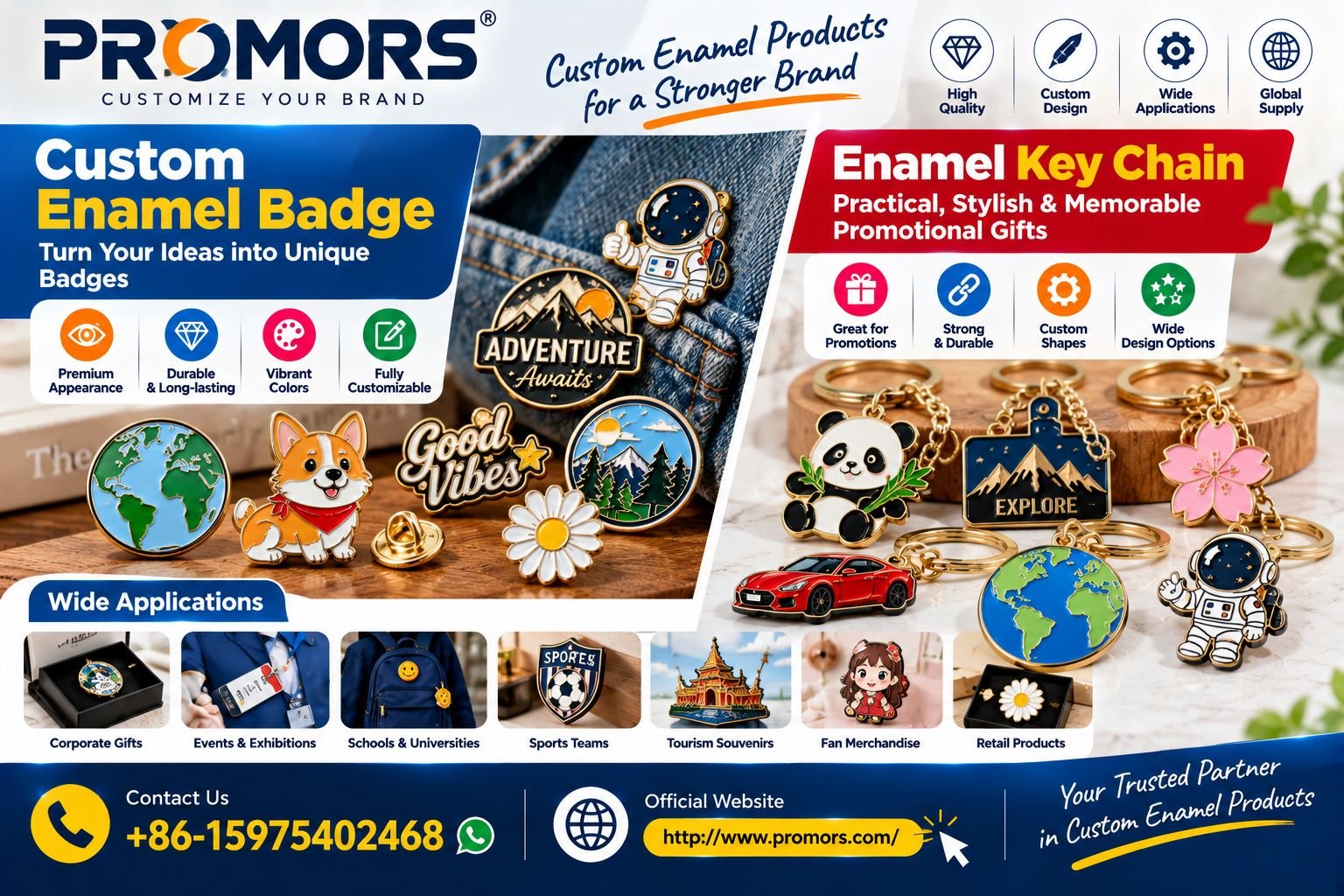
Consumers often appreciate souvenirs that represent memorable places, cultural experiences, artistic interests, or personal connections. This creates opportunities for businesses to develop merchandise that offers more than decorative value.
A custom enamel badge provides retailers with a compact, visually distinctive product that can feature original illustrations, local landmarks, artistic symbols, and exclusive designs.
Similarly, an enamel key chain offers a practical merchandise option that combines personalised artwork with everyday functionality.
For souvenir businesses and specialty retailers, these accessories can support themed collections, product differentiation, and customer engagement while occupying relatively little display space.
Why Collectible Merchandise Matters in Retail
Souvenir shopping often involves emotional purchasing decisions.
Customers may select an accessory because it reminds them of a destination, an exhibition, or an experience they want to remember.
Unlike generic promotional products, thoughtfully designed collectibles can represent a specific story or theme.
A museum shop, for example, might develop a collection inspired by artwork, architecture, or educational exhibits.
A tourist attraction could create merchandise featuring distinctive local symbols.
The objective is to create products that customers appreciate for both their appearance and personal significance.
What Is a Custom Enamel Badge?
A custom enamel badge is a decorative metal accessory produced with personalised artwork and coloured enamel detailing.
Depending on the manufacturing technique, the design may feature raised metal borders, recessed colour areas, or a smoother polished surface.
These badges are commonly attached to jackets, backpacks, hats, and other suitable accessories.
For retailers, enamel badges offer opportunities to develop small merchandise collections based on specific themes.
Their compact size makes them suitable for gift shops with limited display areas.
However, successful product development requires attention to artwork clarity, attachment quality, and manufacturing specifications.
How Enamel Key Chains Complement Souvenir Collections
An enamel key chain combines decorative artwork with practical keyring hardware.
This makes it suitable for customers who prefer accessories that can be carried or used regularly.
Key chains can feature the same visual themes as enamel badges while offering a different product format.
For example, a destination-themed merchandise collection might include a landmark badge alongside a matching key chain.
Offering coordinated accessories can give shoppers greater flexibility when selecting souvenirs.
Retailers should evaluate hardware durability, product weight, and finishing quality to ensure the merchandise meets customer expectations.
Creating Collections Around Local Identity
One approach to souvenir merchandising involves using artwork inspired by local culture and distinctive destinations.
Possible themes include:
- Architectural Landmarks: Illustrations of recognisable buildings or monuments.
- Cultural Symbols: Artwork reflecting authorised local heritage themes.
- Nature and Wildlife: Designs inspired by regional landscapes and animals.
- Traditional Patterns: Decorative elements connected to regional craftsmanship.
- Artistic Illustrations: Original designs created specifically for merchandise.
- Destination Typography: Place names combined with attractive lettering.
Retailers should respect cultural significance and obtain appropriate permissions where required.
Original artwork can help create a more distinctive merchandise identity.
Comparing Enamel Badges and Enamel Key Chains
| Feature | Custom Enamel Badge | Enamel Key Chain |
| Main Purpose | Decorative collectible accessory | Functional souvenir accessory |
| Common Use | Jackets, bags, hats | Keys, backpacks, bags |
| Design Style | Compact illustrations and symbols | Artwork with connecting hardware |
| Retail Display | Display cards and pin boards | Hanging racks and gift displays |
| Customer Appeal | Collectors and accessory enthusiasts | Everyday accessory buyers |
| Key Quality Factor | Pin fastening and enamel finish | Keyring hardware and durability |
Both products can support a coordinated merchandise range.
Why Limited-Edition Designs Attract Interest
Retailers may introduce limited-edition accessories to highlight a particular exhibition, artistic theme, or product collection.
These designs can create a distinctive identity within a broader merchandise range.
However, limited-edition claims should be genuine and supported by clear production or availability information.
Businesses should avoid creating misleading impressions of scarcity.
Retailers can also explore coordinated sets that encourage customers to discover several related designs.
Packaging as Part of the Souvenir Experience
Packaging can help explain the meaning behind a merchandise collection.
A backing card might feature a short description of the artwork, location, or cultural inspiration.
Gift boxes can provide a more formal presentation for selected collections.
Retailers may also use recyclable or reduced-material packaging where suitable.
However, environmental claims should reflect actual material characteristics and disposal requirements.
Good packaging should protect the accessory, communicate relevant information, and complement the visual design.
Artwork Preparation and Manufacturing Considerations
Enamel accessories require designs suited to the selected production method.
Extremely fine lettering, complicated gradients, or closely positioned details may not reproduce effectively using every enamel technique.
Designers should review artwork at the intended physical size.
Manufacturing considerations may include:
- Appropriate metal base material.
- Soft enamel or hard enamel finishing.
- Accurate colour specifications.
- Suitable plating and surface finishes.
- Reliable pins, clasps, or keyring attachments.
- Defined dimensions and acceptable tolerances.
Manufacturers should explain technical limitations before tooling approval.
A physical sample can help retailers assess whether the finished product matches the intended design.
Protecting Original Artwork and Brand Identity
Intellectual property is important when developing merchandise featuring illustrations, logos, landmarks, or fictional characters.
Retailers should confirm that artwork is original, appropriately licensed, or otherwise authorised for commercial use.
Purchasing products based on unlicensed designs can create legal and reputational risks.
Clear agreements with illustrators and manufacturing partners can help establish ownership and permitted usage.
Businesses should also maintain approved artwork files and production specifications.
This supports consistent reproduction and helps protect the identity of the merchandise collection.
Managing Product Quantities and Retail Display
Merchandise planning requires careful consideration of expected customer interest, available display space, and production costs.
Ordering excessively large quantities may create unnecessary inventory.
Conversely, quantities that are too small may increase unit costs or restrict availability.
Retailers should consider tooling charges, minimum order requirements, packaging expenses, and product variations.
Display presentation also matters.
Grouping related designs together can help customers understand the collection and compare available accessories.
Clear pricing and attractive product presentation support a more convenient shopping experience.
Frequently Asked Questions (FAQs)
1. What is a custom enamel badge used for in souvenir retail?
It is used as a decorative collectible featuring artwork associated with destinations, cultural themes, attractions, or original merchandise collections.
2. Can an enamel key chain be customised with original illustrations?
Yes. Suitable artwork can be incorporated into enamel key chains, subject to manufacturing requirements and intellectual property permissions.
3. What is the difference between soft enamel and hard enamel?
Soft enamel generally has recessed coloured areas, while hard enamel is processed to create a smoother, more level surface.
4. Are enamel accessories suitable for museum gift shops?
Yes. They can represent authorised exhibits, educational themes, artistic collections, and destination-related merchandise.
5. What affects the manufacturing cost of enamel souvenirs?
Costs depend on product dimensions, design complexity, tooling, metal finish, enamel technique, order quantity, and packaging specifications.
Media Contact
Department: Custom Enamel Accessories and Promotional Merchandise
Enquiry Categories: Custom Enamel Badge, Enamel Key Chain, Souvenir Merchandise, Personalised Metal Accessories, Custom Gift Manufacturing, and Retail Promotional Products.
Contact: +86-15975402468
Email: sales@promors.com
Official Website: http://www.promors.com/