In restaurants, hotels, cafeterias, and catering facilities, the period between cooking and serving can influence food temperature, texture, and presentation.
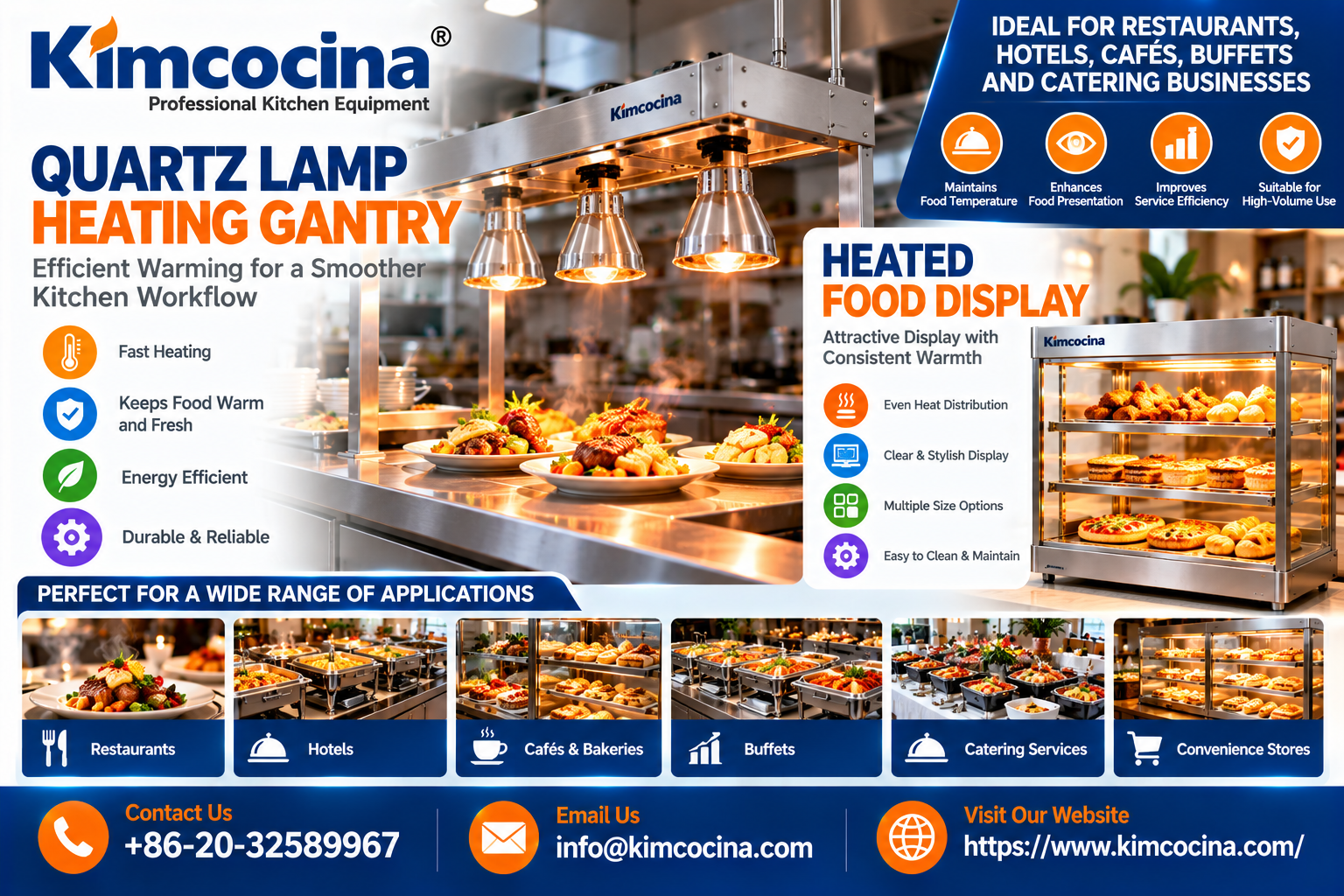
A quartz lamp heating gantry provides radiant heating above suitable food service areas, helping reduce unwanted cooling while dishes await collection or presentation.
Meanwhile, a heated food display provides a dedicated environment for presenting prepared food while maintaining controlled holding conditions.
Although these systems serve related purposes, they differ in construction, heating methods, and intended applications.
For hospitality operators and commercial kitchen managers, understanding these differences can support better equipment selection, workflow planning, and food quality management.
Why Food Holding Equipment Matters
Food quality depends on more than ingredients and cooking techniques.
The way prepared dishes are handled after cooking can influence their appearance, texture, and serving temperature.
Busy commercial kitchens often prepare several dishes simultaneously. Some may require temporary holding before reaching customers.
Without suitable equipment and procedures, prepared food can cool unevenly or lose desirable characteristics.
Food warming equipment can support this process, but it must be used alongside appropriate food safety controls.
What Is a Quartz Lamp Heating Gantry?
A quartz lamp heating gantry is an overhead food warming structure that uses suitable quartz infrared heating lamps to direct radiant energy towards food or serving surfaces.
These systems are commonly considered for restaurant pass counters, commercial kitchens, and designated food holding stations.
Radiant heat transfers energy towards exposed surfaces without relying entirely on heating the surrounding air.
Depending on the equipment, features may include adjustable heating settings, supporting frames, and multiple lamp arrangements.
However, performance depends on lamp characteristics, mounting height, food placement, and operating conditions.
A heating gantry should be used according to its manufacturer’s specifications.
Understanding Heated Food Display Equipment
A heated food display is commercial equipment designed to hold and present suitable prepared food under controlled warming conditions.
Display units may feature glass panels, food trays, shelves, lighting, and temperature controls.
Different models can use radiant heat, heated surfaces, circulating warm air, or combinations of heating methods.
These systems are commonly considered for bakeries, cafés, hotel counters, cafeterias, and takeaway establishments.
The selected equipment should match the food’s holding requirements.
A display unit designed for maintaining food temperature should not automatically be used to cook or reheat inadequately heated products.
How Radiant Heating Supports Restaurant Service
Radiant heating can be useful where prepared dishes must remain accessible to kitchen staff.
For example, an overhead heating gantry may be installed above a designated restaurant pass area.
This arrangement allows staff to position suitable prepared dishes beneath the heating equipment before collection.
However, radiant heating primarily affects exposed surfaces.
Food composition, container design, and holding conditions influence how heat is distributed.
The system should complement efficient serving rather than justify unnecessary holding.
Comparing Food Warming Solutions
| Feature | Quartz Lamp Heating Gantry | Heated Food Display |
| Main Purpose | Overhead radiant warming | Food holding and presentation |
| Typical Location | Kitchen pass counter | Customer-facing service counter |
| Heating Method | Quartz infrared lamps | Varies by equipment design |
| Food Accessibility | Usually open access | Open or enclosed configurations |
| Presentation | Primarily operational | Often designed for visual merchandising |
| Main Consideration | Exposure and lamp positioning | Holding performance and accessibility |
Equipment selection should reflect the required foodservice workflow.
Why Temperature Control Is Essential
Maintaining suitable temperatures is important for food safety.
Different foods have different handling and holding requirements.
Foodservice operators should follow applicable local food safety regulations, approved procedures, and manufacturer guidance.
A displayed equipment temperature does not necessarily represent the temperature throughout the food.
Suitable food thermometers and documented checks may therefore be necessary.
Food should not be kept in unsafe temperature conditions simply because it appears warm.
Equipment settings must be evaluated against actual holding requirements.
Protecting Food Texture and Presentation
Food warming equipment influences more than serving temperature.
Excessive radiant exposure may dry certain food surfaces, while unsuitable humidification can affect crisp products.
The correct arrangement depends on the food being served.
For example, some baked items may benefit from different holding conditions than prepared meals containing sauces.
Operators should evaluate how food quality changes under the selected equipment.
Visual presentation also matters in customer-facing displays.
Clean glass panels, organised trays, and appropriate lighting can help customers view available products.
However, presentation should never take priority over food safety.
Energy and Kitchen Layout Considerations
Commercial kitchen space is often limited, making equipment placement important.
An overhead gantry can provide a warming location without requiring the same enclosed cabinet footprint as certain display systems.
However, it still requires appropriate mounting clearance and protection from heat-sensitive materials.
A display cabinet may need dedicated counter space, ventilation, and electrical connections.
Energy consumption depends on equipment specifications, operating settings, and actual usage.
Businesses should compare documented technical information rather than assuming one heating method is always more efficient.
Cleaning and Maintenance Requirements
Foodservice equipment requires appropriate cleaning to maintain hygiene and performance.
Heating gantries may need inspection of lamps, supporting structures, electrical connections, and accessible surfaces.
Heated displays can require cleaning of glass panels, trays, shelves, and removable food-contact components.
Maintenance should follow manufacturer instructions.
Electrical equipment should be isolated and allowed to cool before appropriate cleaning or servicing.
Damaged heating components should be assessed by qualified personnel.
Routine inspection can help identify operational problems before they affect foodservice activities.
Choosing Suitable Food Warming Equipment
Restaurant and hospitality businesses should review several factors before purchasing equipment:
- Food Type: Confirm suitability for the products being held.
- Holding Requirements: Evaluate temperature performance and relevant safety procedures.
- Kitchen Layout: Consider available space and staff movement.
- Equipment Construction: Review materials, cleaning access, and durability.
- Electrical Requirements: Verify installation compatibility.
- Maintenance Support: Confirm servicing arrangements and replacement component availability.
A suitable equipment supplier should provide clear technical specifications and relevant operating instructions.
Frequently Asked Questions (FAQs)
1. What is a quartz lamp heating gantry?
It is an overhead food warming system that uses quartz infrared lamps to provide radiant heat above suitable commercial kitchen or foodservice areas.
2. What is a heated food display used for?
It holds and presents suitable prepared food in restaurants, cafés, bakeries, cafeterias, and other foodservice establishments.
3. Can a quartz heating gantry replace a heated display cabinet?
Not necessarily. Both systems have different designs and may provide different holding conditions, accessibility, and presentation features.
4. Can food warming equipment maintain food safety automatically?
No. Safe holding requires appropriate equipment operation, food temperature verification, hygienic handling, and compliance with applicable regulations.
5. How should businesses choose commercial food warming equipment?
They should evaluate food characteristics, holding requirements, equipment capacity, available space, energy requirements, and maintenance support.
Media Contact
Department: Commercial Kitchen Equipment and Foodservice Solutions
Email : info@kimcocina.com
Contact : +86-20-32589967
Official Website : https://www.kimcocina.com/