
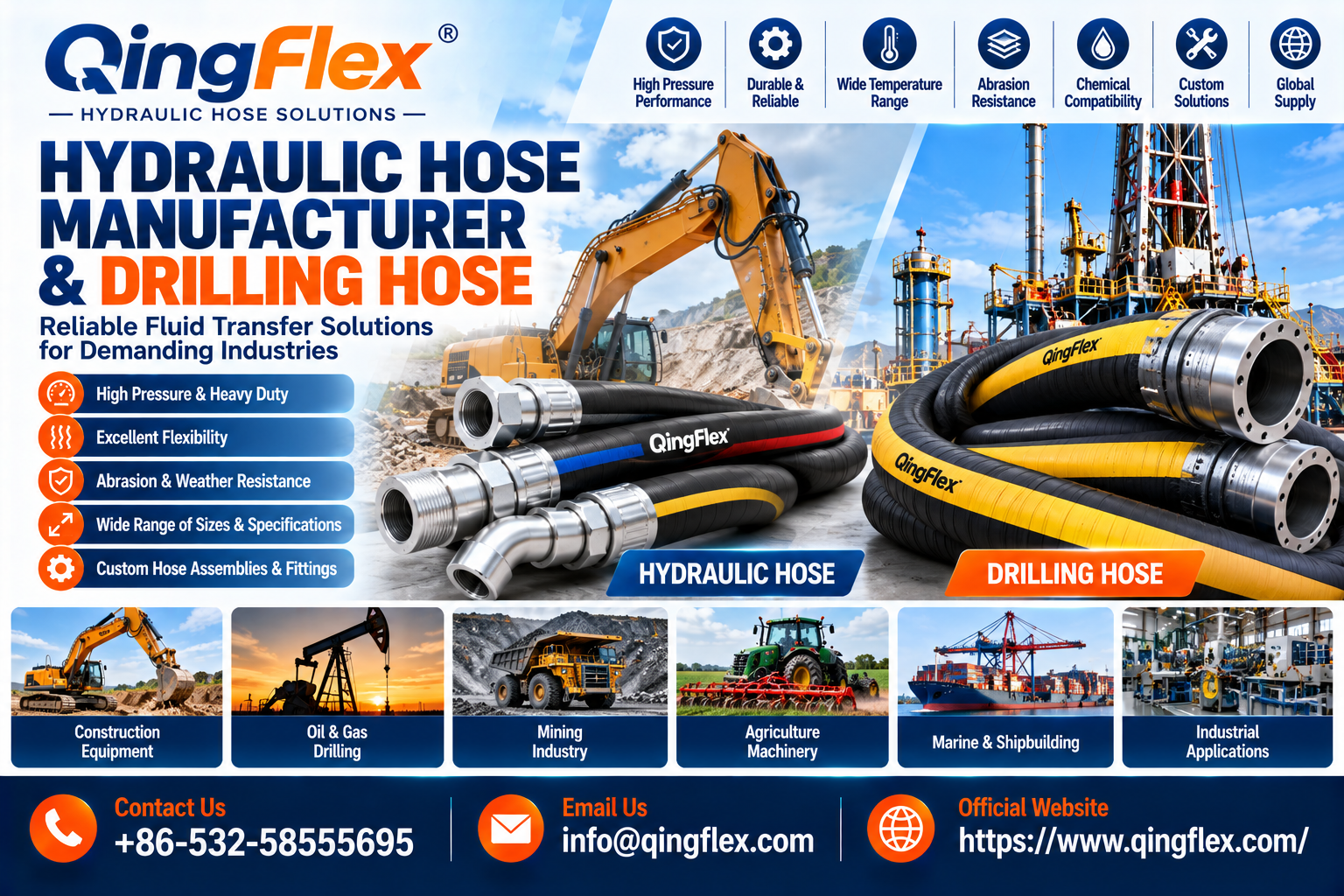
Oilfield equipment operators are placing greater emphasis on hose integrity management as drilling operations demand reliable fluid transfer systems, durable equipment components, and effective maintenance planning.
In drilling environments, flexible hoses may operate under challenging conditions involving pressure fluctuations, vibration, mechanical movement, and exposure to abrasive materials.
A qualified Hydraulic Hose Manufacturer plays an important role in supplying hoses designed for specified hydraulic equipment and industrial operating conditions.
Meanwhile, a drilling hose is a specialised flexible assembly used in appropriate drilling operations, including certain high-pressure drilling fluid circulation systems.
Although these products serve different purposes, their reliability depends on correct selection, installation, inspection, and maintenance.
For drilling contractors, oilfield equipment manufacturers, and industrial procurement teams, understanding hose integrity is essential for reducing unexpected equipment failures and supporting safer operations.
Why Hose Reliability Matters in Drilling Operations
Drilling facilities contain interconnected systems that depend on controlled fluid movement.
Hydraulic circuits may operate equipment such as positioning mechanisms, lifting systems, and other machinery functions.
Specialised drilling hoses may transport drilling fluids between designated system components.
A hose failure can interrupt operations, release pressurised fluid, or damage nearby equipment.
Consequently, industrial operators must consider more than the initial purchase price.
Proper engineering helps ensure that hose assemblies match their intended applications.
What Does a Hydraulic Hose Manufacturer Do?
A Hydraulic Hose Manufacturer develops and produces flexible hose products designed to carry hydraulic fluids under specified operating conditions.
Hydraulic hose construction may include an inner tube, reinforcement layers, and an external protective cover.
Depending on the application, reinforcement may involve textile materials or steel wire.
Different designs provide different pressure ratings, flexibility characteristics, and environmental capabilities.
Manufacturers must consider fluid compatibility, operating temperature, pressure requirements, and mechanical performance.
Industrial buyers should verify technical specifications and applicable product standards before selecting a hose.
The correct hose must also be assembled with compatible fittings using approved procedures.
Understanding the Purpose of a Drilling Hose
A drilling hose is a specialised industrial hose designed for particular drilling-related fluid transfer applications.
Certain high-pressure drilling hoses are used in drilling fluid circulation systems, where they must accommodate movement and demanding pressure conditions.
These hoses can differ significantly from conventional hydraulic hoses in construction, dimensions, reinforcement, and intended service.
For example, a rotary drilling hose may require characteristics suited to drilling fluid delivery and equipment movement.
However, drilling hoses are not universally interchangeable.
Equipment manufacturers should evaluate the actual hose specification, end connections, service conditions, and relevant standards.
Why Pressure Fluctuations Require Attention
Industrial hoses may experience changes in pressure during normal equipment operation.
Repeated pressure fluctuations can contribute to fatigue in suitable hose constructions.
Unexpected pressure surges may also exceed the intended operating conditions.
Therefore, nominal working pressure should not be the only factor considered during selection.
Engineers must understand the actual pressure profile, including possible transient conditions.
Appropriate system design and operating controls help reduce unnecessary stress on flexible connections.
Comparing Hydraulic and Drilling Hose Requirements
| Evaluation Factor | Hydraulic Hose | Drilling Hose |
| Main Application | Hydraulic power transmission | Specialised drilling fluid transfer |
| Operating Environment | Industrial and mobile machinery | Drilling rigs and related equipment |
| Important Consideration | Fluid compatibility and pressure | Drilling media, pressure and movement |
| Mechanical Requirement | Flexibility and suitable routing | Flexibility under specified dynamic conditions |
| Inspection Priority | Cover damage, leaks and fitting condition | Assembly integrity, abrasion and connection condition |
| Selection Basis | Approved hydraulic system specifications | Applicable drilling service specifications |
Each product must be selected according to its specific technical requirements.
How Hose Routing Influences Service Life
Incorrect hose installation can introduce unnecessary mechanical stress.
Excessive bending, twisting, contact with sharp surfaces, and unsuitable support arrangements may contribute to premature damage.
For hydraulic systems, installers should follow the manufacturer’s specified minimum bend radius and routing guidance.
Drilling hose assemblies may require additional consideration of equipment movement and suspension arrangements.
Proper routing helps prevent avoidable interference with surrounding machinery.
However, correct installation does not eliminate the need for inspection and maintenance.
Abrasion Resistance in Demanding Oilfield Environments
Drilling sites may expose hose assemblies to contact with metal structures, equipment surfaces, and abrasive materials.
Repeated rubbing can damage protective covers and potentially expose reinforcement.
Suitable external protection may be considered where permitted by the hose manufacturer’s instructions.
However, protective coverings should not conceal damage or interfere with inspection.
The correct approach depends on hose design and operating conditions.
Operators should evaluate abrasion risks during installation and equipment maintenance planning.
Building a Preventive Hose Inspection Programme
Preventive inspection can help identify visible problems before equipment failure.
A suitable programme may include checking:
- External cover condition and abnormal wear.
- Evidence of leakage or fluid contamination.
- Fitting condition and connection security.
- Unusual deformation, kinking, or twisting.
- Contact with surrounding equipment.
- Identification markings and service documentation.
Inspection should follow applicable equipment instructions and site safety procedures.
Pressurised hoses must never be examined using unsafe contact methods, since high-pressure fluid injection can cause serious injury.
Suspected failures should be managed through appropriate shutdown, isolation, and depressurisation procedures.
Why Hose Documentation Matters
Hose identification and traceability can support equipment maintenance and procurement.
Relevant documentation may include hose type, pressure rating, dimensions, fitting specifications, and applicable manufacturing information.
These records help maintenance teams determine whether a replacement assembly matches the approved application.
Incorrect substitutions may introduce serious compatibility problems.
For drilling equipment, documentation should also address relevant service conditions and connection requirements.
Clear records support consistent replacement decisions and better communication between operators and suppliers.
The Role of Quality Assurance in Hose Manufacturing
Industrial hose quality depends on material selection, construction consistency, and appropriate testing.
Depending on product type and applicable standards, evaluation may involve dimensional checks, pressure testing, and other specified performance assessments.
However, testing requirements differ among hydraulic and drilling hose categories.
Buyers should not assume that a hose suitable for one pressure-related application is approved for another.
Relevant certifications or compliance claims should be verified against the actual product and standard.
Reliable quality documentation helps purchasers make informed decisions.
Reducing Unplanned Downtime Through Better Hose Management
Unexpected hose failures can interrupt drilling activities and create additional maintenance requirements.
A structured hose management programme can help operators identify critical assemblies, maintain suitable replacement stocks, and plan inspections.
Replacement schedules should reflect manufacturer guidance, service conditions, inspection findings, and applicable requirements.
Simply replacing hoses according to an arbitrary schedule may not address the actual causes of damage.
Effective maintenance combines technical records, qualified personnel, and application-specific risk assessment.
Frequently Asked Questions (FAQs)
1. What does a Hydraulic Hose Manufacturer produce?
A hydraulic hose manufacturer produces flexible hoses designed for specified hydraulic fluid transmission applications in industrial and mobile equipment.
2. What is a drilling hose used for?
A drilling hose is used for specialised drilling-related fluid transfer, including certain high-pressure drilling fluid circulation applications.
3. Are hydraulic hoses and drilling hoses interchangeable?
No. Their design, intended media, pressure requirements, and applicable standards may differ significantly.
4. What causes premature industrial hose failure?
Potential causes include incorrect installation, excessive pressure, abrasion, incompatible fluids, mechanical damage, and unsuitable operating conditions.
5. How can drilling operators improve hose reliability?
Operators should select approved hose assemblies, maintain correct installation practices, follow inspection procedures, document service conditions, and replace damaged equipment appropriately.
Media Contact
Department: Industrial Hydraulic Hose and Drilling Equipment Enquiries
Phone: +86-532-58555695
Email: info@qingflex.com
Official Website: https://www.qingflex.com/