
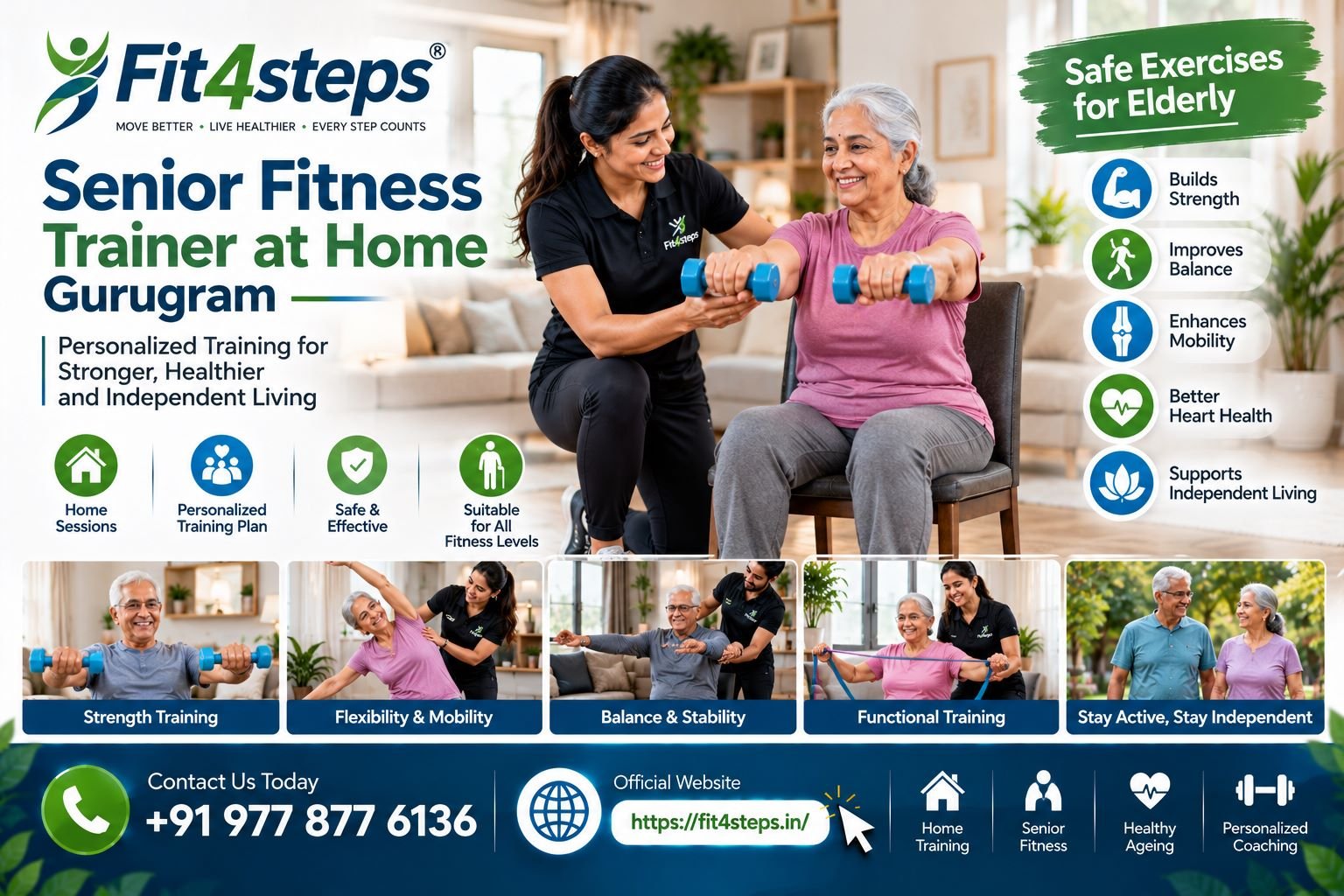
Home-based fitness is emerging as a practical option for older adults who prefer exercising in familiar surroundings without travelling to a gym or fitness centre.
For families exploring a Senior fitness trainer at home Gurugram, the primary consideration is finding qualified guidance that combines suitable physical activity with individual safety requirements.
Unlike conventional fitness programmes focused on athletic performance, home-based senior exercise can prioritise controlled movement, stability, comfortable mobility, and confidence during everyday activities.
Understanding Safe exercises for elderly individuals is particularly important because fitness levels, medical conditions, and movement capabilities differ considerably among older adults.
A carefully planned home fitness programme can make physical activity more approachable while helping participants develop useful movement skills within their own living environments.
Why Home-Based Senior Fitness Requires Special Attention
Exercising at home provides familiarity and convenience, but residential spaces are not automatically designed for physical training.
Loose rugs, slippery flooring, inadequate lighting, and unstable furniture can create unnecessary risks.
Before introducing exercises, a qualified trainer should assess whether the available space is appropriate.
The assessment may include reviewing flooring, walking areas, furniture stability, and the equipment required for selected activities.
This approach supports responsible exercise planning rather than immediately beginning a demanding workout.
What Does a Senior Fitness Trainer at Home Gurugram Do?
A Senior fitness trainer at home Gurugram provides personalised exercise guidance within a participant’s residence.
Training may include suitable strength exercises, balance activities, mobility movements, and gentle cardiovascular conditioning.
A professional trainer should consider the participant’s experience, physical capabilities, personal objectives, and relevant health information.
For example, one individual may want to improve confidence when walking indoors, while another may focus on maintaining general strength for household activities.
A trainer should adapt the programme according to the individual’s abilities instead of applying an identical routine to every senior.
Understanding Safe Exercises for Elderly Individuals
Safe exercises for elderly adults are activities selected and adapted to the individual’s physical condition, movement ability, and relevant health considerations.
No exercise is universally safe for every person.
However, several basic movements may be appropriate for selected individuals under suitable supervision.
Examples of Adaptable Home Exercises
- Supported Sit-to-Stand: Practising standing from a stable chair to develop functional leg strength.
- Seated Marching: Moving the legs alternately while seated to encourage controlled activity.
- Wall Push-Ups: Using a stable wall for modified upper-body resistance exercises.
- Supported Heel Raises: Raising the heels while holding a secure support, where appropriate.
- Gentle Walking: Moving through a clear, suitable walking area at a comfortable effort.
Exercise selection should follow individual assessment, and participants should avoid movements that cause pain, dizziness, or unusual discomfort.
Why Home Safety Assessment Matters
An important advantage of home-based coaching is the opportunity to observe the environment in which everyday movement occurs.
A trainer may identify practical obstacles that could interfere with suitable exercise.
For example, a narrow passage may be inappropriate for certain walking drills, while an unstable chair should not be used for supported movements.
Relevant considerations include:
- Clear Exercise Space: Remove avoidable obstacles from movement areas.
- Stable Furniture: Use appropriate supports that cannot easily move or tip.
- Suitable Footwear: Choose secure footwear appropriate for the exercises.
- Adequate Lighting: Ensure movement areas are clearly visible.
- Equipment Safety: Use resistance equipment suitable for the participant’s ability.
Significant home accessibility concerns may require evaluation by an appropriate rehabilitation or accessibility professional.
How Strength and Balance Work Together
Muscle strength and balance contribute to comfortable everyday movement.
Strength supports actions such as rising from a chair or carrying suitable household objects.
Balance helps individuals maintain stability during standing, turning, and changing direction.
An exercise programme may combine both elements according to the participant’s abilities.
For instance, controlled lower-body strengthening may complement appropriately supervised standing exercises.
However, balance activities can present additional risks for individuals with instability or previous falls.
Individuals with significant balance problems should seek appropriate clinical assessment before attempting challenging exercises.
Recognising Individual Physical Limitations
Some older adults experience joint discomfort, reduced endurance, mobility limitations, or medical conditions that influence exercise participation.
These circumstances require careful consideration.
A fitness trainer should avoid diagnosing medical conditions or prescribing rehabilitation treatment beyond their professional qualifications.
Participants with relevant cardiovascular concerns, recent injuries, unexplained symptoms, or significant mobility difficulties may require healthcare clearance or specialised guidance.
During exercise, chest pain, faintness, or unusual breathlessness should be treated as warning signs requiring activity to stop and appropriate medical attention.
Safety should take priority over completing a planned routine.
Home-Based Exercise and Functional Independence
The value of home fitness often extends beyond improving performance during individual exercises.
Many seniors want to remain comfortable performing familiar activities.
These may include standing from a chair, moving between rooms, reaching for commonly used objects, or carrying light household items.
A qualified trainer can select appropriate movements that relate to these practical objectives.
However, training should not require participants to perform unsafe versions of everyday tasks.
The goal is to develop suitable physical capacity through controlled progression and realistic expectations.
How Families Can Support Senior Fitness
Family members can contribute by helping create a suitable exercise environment and respecting the participant’s preferences.
Their involvement may include ensuring that the training area is clear, arranging appropriate equipment, and communicating relevant concerns with the trainer when the participant agrees.
However, family encouragement should not become pressure.
Older adults should remain involved in decisions about exercise activities and personal goals.
A positive training environment promotes independence, confidence, and comfortable participation.
Selecting a Suitable Home Fitness Trainer in Gurugram
When evaluating personal training services, families should consider professional competence rather than promotional claims.
| Selection Factor | Why It Matters |
| Fitness Qualifications | Supports appropriate exercise instruction |
| Senior Coaching Experience | Helps with suitable exercise adaptations |
| Home Safety Awareness | Reduces avoidable environmental risks |
| Individual Assessment | Supports personalised activity selection |
| Exercise Modification | Accommodates different physical abilities |
| Communication Skills | Encourages understanding and confidence |
A suitable trainer should also recognise when a healthcare professional’s assessment is necessary.
Frequently Asked Questions (FAQs)
1. What does a senior fitness trainer at home in Gurugram provide?
A qualified trainer provides personalised exercise instruction, movement guidance, and appropriate activity modifications within the participant’s home.
2. What are some safe exercises for elderly beginners?
Depending on individual ability, suitable options may include seated marching, supported sit-to-stand movements, gentle walking, and modified resistance exercises.
3. Can seniors exercise at home without gym equipment?
Yes. Many appropriate activities use body weight, stable supports, or simple equipment, depending on individual requirements.
4. Is home fitness suitable for seniors with balance difficulties?
It may be suitable with appropriate assessment and supervision. Significant balance problems or recurrent falls warrant clinical evaluation.
5. How can families choose a qualified senior fitness trainer?
They should review qualifications, relevant experience, exercise assessment practices, safety awareness, and the ability to adjust movements according to individual needs.
Media Contact
Department: Senior Home Fitness and Personal Wellness Enquiries
Contact: +91 977 877 6136
Email: fit4stepswellness@gmail.com
Official Website: https://fit4steps.in/
Read More:-
https://shopnets.com/personal-fitness-training-for-50-building-strength-and-everyday-independence/