
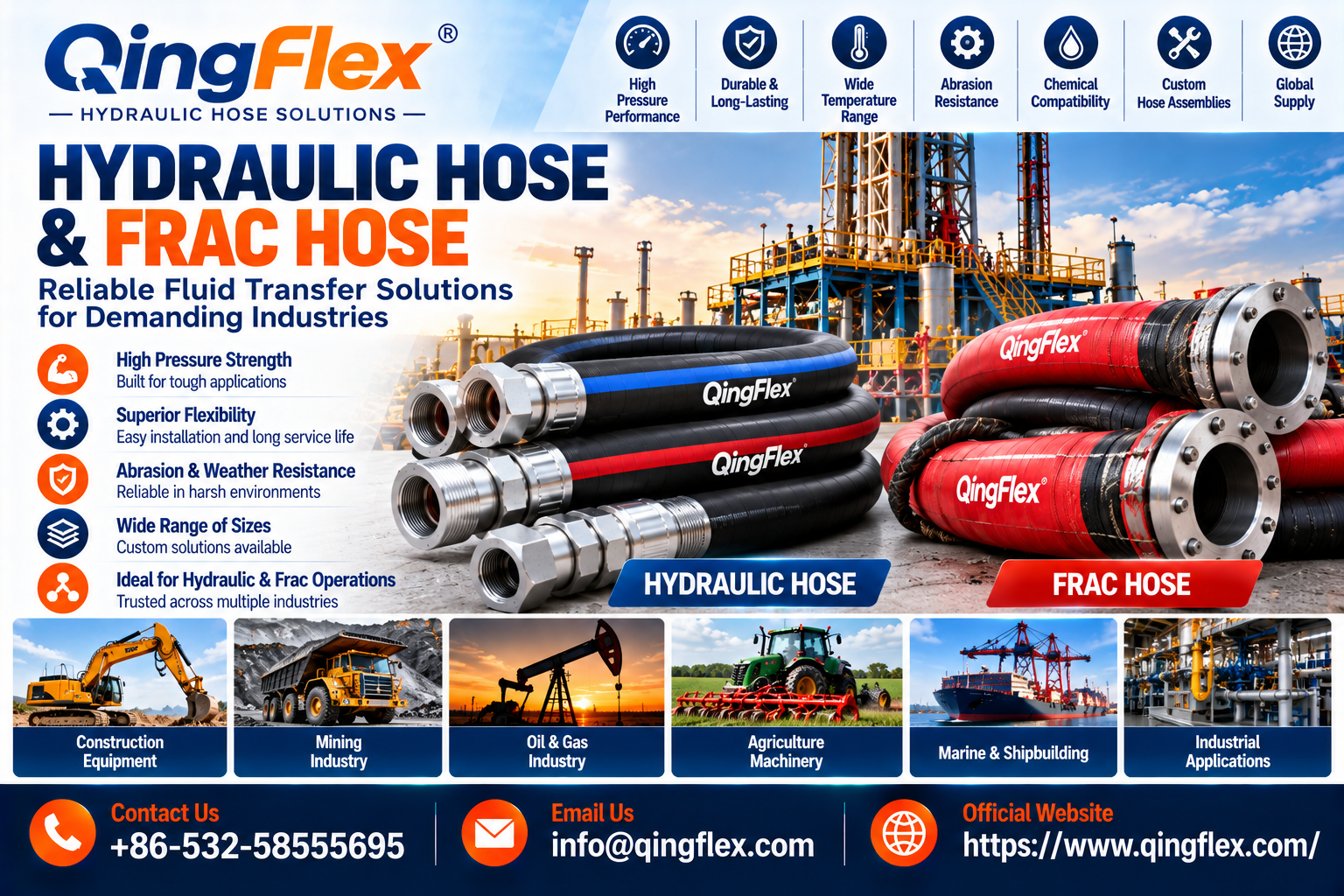
Energy companies, hydraulic equipment manufacturers, and industrial contractors are placing greater emphasis on dependable fluid transfer systems as operational environments become more demanding. From hydraulic machinery to hydraulic fracturing sites, selecting suitable hoses is essential for maintaining system performance, managing fluid movement, and reducing operational risks.
A Hydraulic Hose transfers pressurized hydraulic fluid between compatible components in fluid-power systems. Meanwhile, a frac hose serves specialized fluid transfer requirements associated with hydraulic fracturing operations, including water handling, fluid delivery, and other application-specific services.
Although both products involve flexible fluid movement, their construction, pressure requirements, and operating conditions may differ significantly.
Why Hose Selection Is Critical in Energy Operations
Industrial fluid systems frequently operate under challenging conditions involving pressure changes, vibration, temperature variations, and exposure to chemicals.
An unsuitable hose can cause leakage, operational interruptions, equipment damage, or serious safety hazards.
Consequently, equipment operators are focusing on selecting hoses according to specific service requirements rather than general product descriptions.
This approach is especially important for contractors managing multiple fluid systems at industrial and energy facilities.
What Is a Hydraulic Hose?
A Hydraulic Hose is a flexible tube assembly engineered to carry hydraulic fluids under specified pressure and temperature conditions.
It is commonly used to transmit fluid power between pumps, valves, cylinders, motors, and other compatible components.
Main Construction Features
- Inner Tube: Designed for compatibility with the intended hydraulic fluid.
- Reinforcement: Provides strength using suitable textile, braided-wire, or spiral-wire arrangements.
- Outer Cover: Protects against specified environmental conditions.
- End Fittings: Connect the assembly to compatible equipment.
- Identification Markings: Communicate relevant pressure and product specifications.
The appropriate design depends on operating pressure, fluid composition, temperature, movement, and installation requirements.
Understanding Frac Hose Applications
A frac hose is a flexible hose used in suitable fluid-handling operations associated with hydraulic fracturing.
Fracturing sites require movement of water, prepared fluids, and other process materials between storage, mixing, and compatible transfer equipment.
Many frac-site hoses are designed for low-pressure suction and discharge duties. Specialized hoses may serve other pressure applications, but high-pressure fracturing injection systems require separately engineered and rated equipment.
Common Applications
Water Transfer: Moving water between suitable storage and processing locations.
Fluid Preparation: Supporting compatible fluid-mixing arrangements.
Transfer Operations: Connecting designated equipment and temporary fluid-handling systems.
Flowback Handling: Carrying suitable recovered fluids where the hose is specifically rated for their composition and operating conditions.
Temporary Site Infrastructure: Providing flexible connections between approved components.
Every application requires verification of pressure rating, fluid compatibility, and environmental suitability.
Hydraulic Hose vs. Frac Hose
| Feature | Hydraulic Hose | Frac Hose |
| Primary function | Hydraulic power transmission | Fracturing-site fluid transfer |
| Common fluids | Hydraulic oils and compatible fluids | Water, prepared fluids, or suitable recovered fluids |
| Pressure requirements | Application-specific hydraulic ratings | Depends on suction, discharge, or specialized service |
| Typical applications | Machinery and fluid-power equipment | Energy-site fluid handling |
| Critical consideration | Pressure impulses and fitting compatibility | Fluid composition, abrasion, and transfer conditions |
These products are not interchangeable simply because they are flexible hoses.
Managing Fluid Compatibility and Abrasion
Fluid composition is an important consideration when selecting hoses for energy operations.
Hydraulic fluids may contain additives affecting the compatibility of rubber or thermoplastic materials.
Fracturing-related fluids can contain different chemical additives or suspended solids, while recovered fluids may introduce additional compatibility challenges.
Important Selection Factors
- Chemical composition of the transferred fluid.
- Expected operating temperature.
- Presence of abrasive particles.
- Required suction or discharge performance.
- Internal hose lining material.
- Cleaning and flushing requirements.
Operators should review manufacturer compatibility information and conduct additional assessments where necessary.
Why Hose Routing Matters
Even a correctly rated hose can experience premature deterioration if installed improperly.
Excessive bending, twisting, unsupported weight, or repeated contact with abrasive surfaces can weaken a hose assembly.
For a Hydraulic Hose, poor routing may contribute to fatigue under pressure cycles and mechanical movement.
For a frac hose, unsuitable positioning can expose the assembly to vehicle movement, sharp objects, or unnecessary tensile loads.
Proper routing should follow manufacturer instructions and relevant site safety requirements.
Fluid Transfer Efficiency and Equipment Compatibility
Efficient fluid transfer requires suitable hose dimensions, flow characteristics, and connection arrangements.
An undersized hose may introduce excessive pressure losses, while an oversized assembly can create unnecessary handling difficulties.
Equipment designers should evaluate:
- Required flow capacity.
- Internal hose diameter.
- Allowable pressure loss.
- Maximum working pressure.
- Pump and connection compatibility.
- Expected movement and installation layout.
These considerations help operators balance performance with practical site requirements.
Preventing Failures Through Inspection
Hose inspection is essential because operating environments can accelerate wear.
Common Warning Signs
Surface Cracking: May indicate material deterioration or mechanical stress.
Leaks: Can reveal damage to the hose or connections.
Bulging: May indicate structural weakness.
Exposed Reinforcement: Suggests significant outer-cover damage.
Kinking: Can restrict flow and damage the hose structure.
Damaged Fittings: May compromise assembly integrity.
Damaged hoses should be removed from service and assessed by qualified personnel.
High-pressure fluid can penetrate skin and cause serious injury. Personnel must never use their hands to investigate suspected leaks.
Quality Assurance and Product Traceability
Industrial buyers should request clear specifications and relevant quality documentation.
Important information may include pressure ratings, material construction, temperature limits, hose identification, and applicable test records.
For specialized fracturing applications, operators should verify suitability for the intended service and any applicable industry or project requirements.
Traceability supports maintenance planning and helps identify products requiring inspection or replacement.
Procurement Strategies for Industrial Hose Buyers
Purchasing teams should evaluate the complete cost of hose operation rather than concentrating exclusively on initial pricing.
Important considerations include compatibility, assembly quality, service requirements, replacement availability, and supplier support.
For large projects, standardizing suitable hose specifications can simplify inventory management.
However, standardization should never result in using one hose type for incompatible applications.
Frequently Asked Questions (FAQs)
1. What is a Hydraulic Hose?
It is a flexible assembly designed to transfer hydraulic fluids under specified operating conditions.
2. What is a frac hose?
It is a specialized hose used for suitable fluid transfer operations associated with hydraulic fracturing.
3. Are hydraulic hoses and frac hoses the same?
No. Their applications, fluid compatibility, construction, and pressure ratings may differ.
4. Where are hydraulic hoses commonly used?
They are used in construction equipment, industrial machinery, agricultural equipment, and fluid-power systems.
5. What fluids can frac hoses transfer?
Depending on their ratings, suitable hoses may transfer water, prepared fracturing fluids, or specified recovered fluids.
Media Contact
Department: Industrial Hose Technology and Energy Equipment Communications
Email: info@qingflex.com
Contact: +86-532-58555695
Official Website: https://www.qingflex.com/